

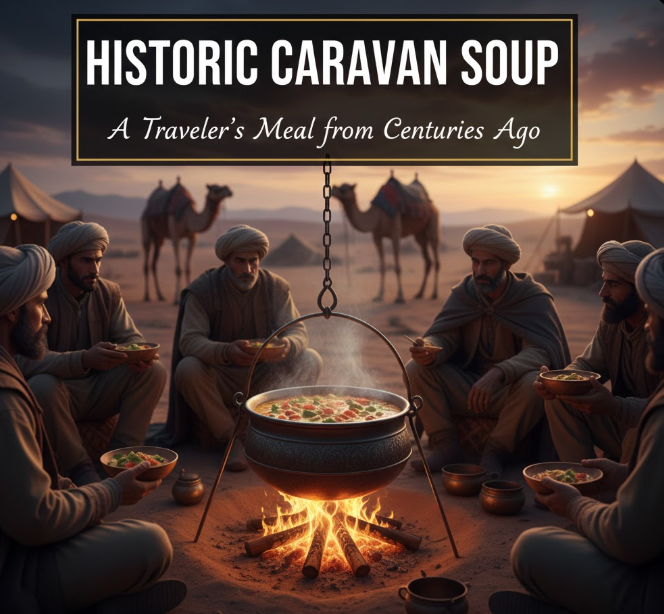
Introduction: A Soup That Traveled Through Time
Imagine walking along dusty trade routes, the sun beating down on your back, and your stomach growling after a long day on the road. Centuries ago, travelers and traders relied on something simple yet hearty to keep them going: caravan soup. This wasn’t just any soup—it was a lifeline, a meal designed to provide warmth, nutrition, and energy during long journeys across deserts, mountains, and plains. 🏜️
What Was Caravan Soup?
Caravan soup was a type of stew or broth made from whatever ingredients were available along the trade routes. Meat, grains, dried vegetables, and local herbs came together in one pot. It was nutritious, easy to cook over an open fire, and could feed a group of weary travelers. Unlike modern soups, it had no fixed recipe. Travelers had to adapt to the ingredients they found, making each version unique.
Key Ingredients of Historic Caravan Soup
Travelers relied on ingredients that could last long without spoiling. Here’s a small table of common ingredients:
| Ingredient | Purpose | Notes |
|---|---|---|
| Dried meat | Protein and flavor | Usually lamb, goat, or beef |
| Grains (barley, rice) | Energy and fullness | Barley was preferred for its durability |
| Dried vegetables | Vitamins and texture | Carrots, onions, turnips |
| Herbs & spices | Taste and medicinal properties | Thyme, sage, coriander |
| Salt | Preservation and taste | Essential for keeping ingredients safe |
How It Was Prepared
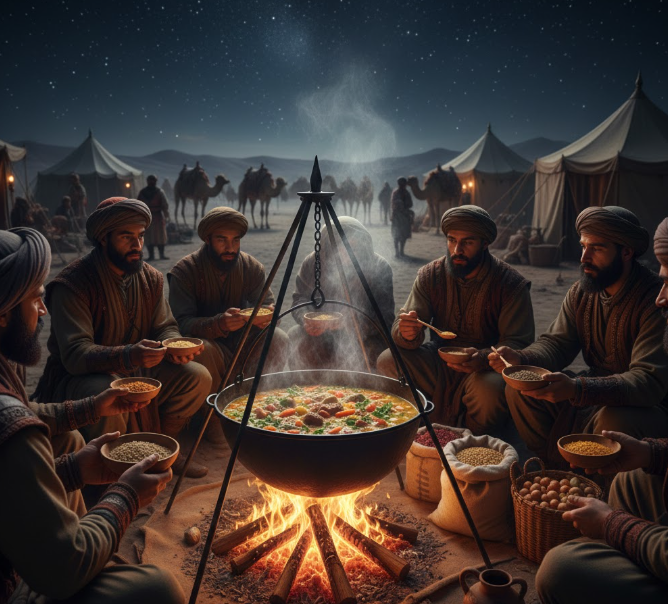
Preparation was simple but clever. Travelers would start by boiling water in a metal pot. Meat would go in first, slowly releasing flavor. Grains were added next, followed by dried vegetables and spices. The soup simmered for hours, sometimes even overnight. This slow cooking made the dish not only edible but deeply satisfying.
Interestingly, some caravan routes had designated spots called “soup stations” where travelers could share ingredients or even cook together. This helped communities bond and ensured nobody went hungry. 🥣
Why Caravan Soup Was Essential for Travelers
Caravan soup wasn’t just food; it was survival. Here’s why it was so important:
Energy on the Move: Long journeys required steady energy. Carbs from grains and protein from meat kept travelers strong.
Easy to Store: Ingredients like dried meat and vegetables could last for weeks without refrigeration.
Flexible Recipe: Travelers could adapt the soup depending on availability—no fancy grocery store needed.
Medicinal Value: Herbs weren’t just for flavor—they helped with digestion, colds, and minor wounds.
Regional Variations
Different regions added their own twist to caravan soup.
Middle East: Often used lamb, chickpeas, and dried apricots. Spices like cumin and coriander added warmth.
Central Asia: Barley and mutton dominated, with the occasional dried fruit for sweetness.
North Africa: Harissa or chili paste sometimes spiced up the soup, making it richer in flavor.
Each version reflected local tastes and ingredients, but all shared the same goal: fuel for the journey.
Interesting Facts About Caravan Soup
Travelers sometimes added bones to extract more nutrients, especially calcium. 🦴
Soup was considered a communal meal; sharing it strengthened bonds in the caravan.
Some recipes included wild herbs picked along the road, believed to have healing properties.

Nutritional Value of Caravan Soup
Despite its simplicity, caravan soup was surprisingly nutritious:
| Nutrient | Source in Soup | Benefit |
|---|---|---|
| Protein | Dried meat | Muscle repair and strength |
| Carbohydrates | Grains | Sustained energy |
| Vitamins | Dried vegetables, herbs | Immune support, digestion |
| Minerals | Salt, bones | Electrolyte balance, bone health |
| Fiber | Vegetables, grains | Digestive health |
Modern Take on Caravan Soup
Even today, you can recreate caravan soup at home. Start with a slow cooker or a large pot. Use whatever meat and grains you have, toss in some vegetables, add herbs for flavor, and let it simmer. The goal is simple: a meal that’s filling, nutritious, and comforting—just like travelers centuries ago.
Some food enthusiasts even experiment with dehydrated ingredients to mimic the original experience, keeping the soup authentic while still easy to prepare.
Tips for Making Your Own Historic Caravan Soup
Use dried or smoked meat for that authentic flavor.
Cook grains separately if you want a thicker soup.
Don’t over-season; simplicity was key.
Use a cast-iron pot over an open flame for authenticity. 🔥
Invite friends or family to share—it was always a communal meal.
FAQs About Caravan Soup
Q: Was caravan soup always meat-based?
A: Not always. While meat was preferred for protein, travelers sometimes made vegetarian versions using only grains, beans, and herbs, especially if meat was scarce.
Q: How long could caravan soup last?
A: Ingredients like dried meat and vegetables could last weeks. Once cooked, the soup was usually eaten within a day or two, but some versions could be reheated without spoiling.
Q: Why is it called ‘caravan’ soup?
A: Because it was primarily eaten by people traveling in caravans—groups of traders or travelers moving together across long distances.
Q: Can I make caravan soup vegan?
A: Absolutely! Use beans, lentils, and grains as the protein source and plenty of herbs for flavor. It’ll still be hearty and filling.
Conclusion: A Meal That Traveled Through Centuries
Caravan soup is more than a recipe; it’s a story of survival, creativity, and community. 🏞️ From deserts to mountains, travelers relied on this simple meal to fuel their adventures. Today, making caravan soup is a way to taste history, connect with ancient culinary traditions, and enjoy a comforting, wholesome dish. Whether you’re a history lover or a food enthusiast, caravan soup offers a delicious glimpse into the life of travelers from centuries ago.
