

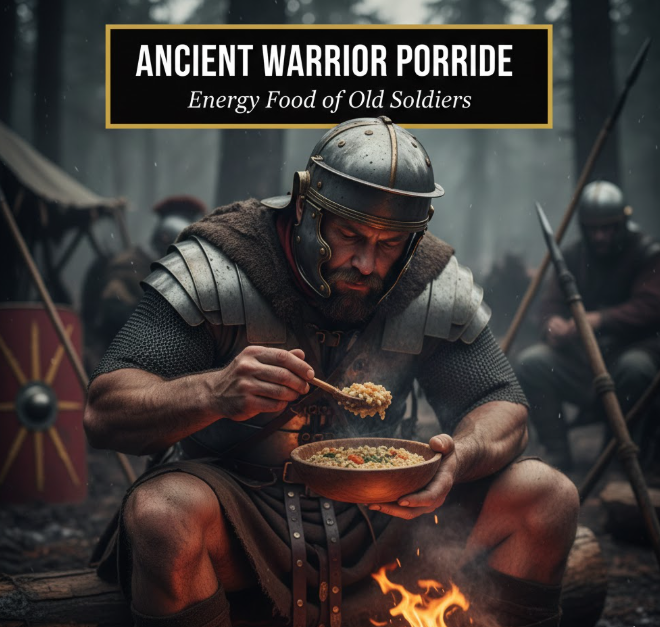
When we hear about ancient warriors—those strong soldiers who marched for days, fought long battles, and survived harsh weather—we often imagine heavy armor, sharp swords, and brave hearts. But behind all that strength, there was something even more important: their food.
And one dish appears again and again in history: a simple bowl of ancient warrior porridge.
Now, this porridge wasn’t just a meal. It was a survival formula, a portable energy source, and honestly, the perfect “old-school power drink” (even though it was eaten with a spoon 😄). Let’s explore what made this porridge so special and why soldiers trusted it with their lives.
What Exactly Was Ancient Warrior Porridge?
Ancient warrior porridge was a thick, hot mix of grains, water, and sometimes nuts or dried fruits. Different armies had their own versions—Roman, Greek, Chinese, Mongolian, and even Viking warriors relied on it.
It was cheap, easy to carry, fast to make, and most importantly, full of slow-release energy. That’s why armies kept huge bags of grains in their camps.
Some soldiers even carried a small pouch of dry grains so they could cook porridge anywhere—even on a rock heated by fire.
Why Soldiers Needed This Porridge
Warriors didn’t sit all day. They marched for hours, fought battles that lasted from sunrise to sunset, and often had no time to eat properly. So they needed food that:
Gave long-lasting energy
Could survive long journeys
Was lightweight to carry
Cooked fast
Was cheap for the whole army
Didn’t spoil easily
This is exactly what porridge did.
Sometimes warriors even ate it cold when they couldn’t make fire. Imagine eating cold wheat mush before battle 😅… but it worked.
Different Types of Warrior Porridge Around the World
Warrior cultures used whatever grains grew in their region. Here’s a simple table that shows this:
| Ancient Warriors | Grain Used in Porridge | Special Additions | Purpose |
|---|---|---|---|
| Roman Soldiers | Emmer wheat | Olive oil, herbs | Endurance on long marches |
| Greek Hoplites | Barley | Honey | Strength and quick recovery |
| Vikings | Oats | Nuts, berries | Warmth and energy in cold weather |
| Mongol Warriors | Millet | Fermented milk | Long travel energy |
| Chinese Soldiers | Rice | Beans, sesame | Balanced nutrition |
This variety made every version of warrior porridge unique, but the goal was always the same: pure fuel for the body.
How the Porridge Gave Warriors Energy
Ancient people didn’t know words like “carbohydrates” or “protein.” They just knew what kept them standing after 20 miles of marching.
Let’s break it down in simple words:
Grains gave steady energy (not a quick spike like sugar)
Nuts provided strength
Dried fruits gave natural sweetness
Herbs helped digestion
Milk or water made it filling
Here’s a quick comparison:
| Ingredient | What It Did for Warriors |
|---|---|
| Grain | Gave long-lasting energy |
| Nuts | Strength for muscles |
| Fruit | Quick recovery boost |
| Salt | Prevented weakness during long marches |
| Herbs | Helped avoid sickness |
No fancy drinks, no chocolates, no energy bars—just smart, simple food 🌾.
How They Cooked It During War
Soldiers didn’t have kitchens. Most of the time, they cooked porridge in:
A metal pot carried by a few soldiers
A clay pot if they were close to camp
A helmet (yes, some armies actually used helmets to cook 🤯)
A carved stone bowl
A leather pouch held near a fire
Cooking steps were nearly always the same:
Heat some water.
Add grains.
Stir with a wooden stick.
Add anything extra—herbs, oil, nuts, berries.
Eat immediately, even if it was half-cooked.
Quick, filling, and easy. Perfect for a warrior’s hectic life.
What Made This Porridge So Special?
1. It never spoiled quickly
Dry grain can last months. Soldiers loved that.
2. It filled the stomach for long hours
One bowl in the morning kept them strong until afternoon.
3. It boosted morale
A warm bowl before a battle gave comfort. Even warriors needed that emotional boost.
4. Cheap and available everywhere
Armies didn’t have to search for fancy food. Grains grew almost everywhere.
5. It kept the body warm
Especially for Vikings and mountain fighters, this was extremely important ❄️🔥.
What a Typical Bowl Contained
Below is a recreated version of what many ancient warriors commonly ate:
| Ingredient | Ancient Purpose | Modern Health Benefit |
|---|---|---|
| Barley/Oats/Wheat | Energy | Keeps blood sugar stable |
| Water or Milk | Hydration | Helps digestion |
| Honey | Quick energy | Rich in antioxidants |
| Salt | Prevents cramps | Rebalances minerals |
| Nuts | Strength | Healthy fats & protein |
| Dried Berries | Sweetness | Vitamins & iron |
Even today, this looks like a pretty healthy breakfast.
A Small Story: Roman Soldiers and Their Porridge
Roman soldiers were called “the machine that conquered the world.”
But their secret wasn’t just discipline—it was their food.
They ate something called “puls.”
It was a simple porridge made of wheat, water, herbs, maybe a little olive oil.
When Roman legions marched across continents, they carried sacks of wheat. If food ran out, their porridge saved them.
Some historians even say Roman soldiers could march 30 kilometers in a day because of this one dish.
It wasn’t fancy, but it worked.
Why Modern People Try Warrior Porridge Again
Today’s world is filled with packaged snacks, energy bars, and sugary drinks. But many people are returning to older, natural foods. Why?
More real ingredients
No preservatives
Cheaper than modern fitness foods
Comforting and simple
Works great for workouts or long workdays
It’s funny how something as old as ancient porridge can compete with modern energy supplements 🥣⚔️.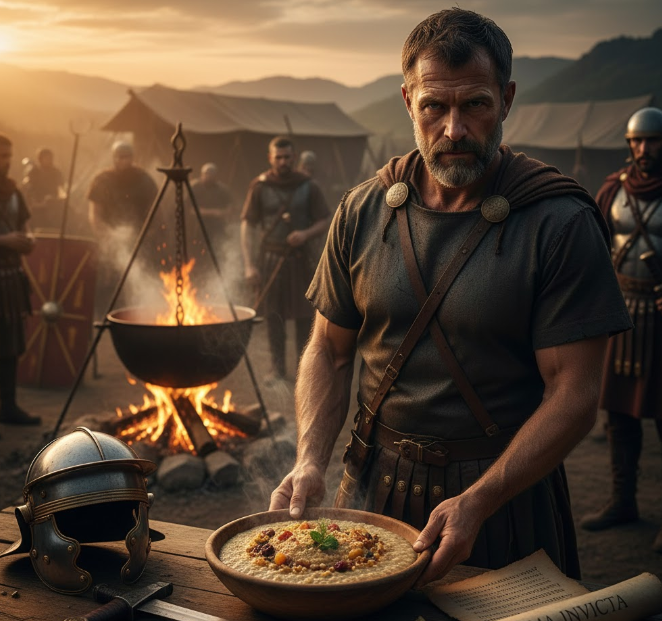
Quick Modern Version You Can Make at Home
Here’s an easy recipe inspired by ancient warriors:
Ingredients:
½ cup oats or barley
1 cup water or milk
1 spoon honey
A pinch of salt
Some nuts
A few raisins or berries
Method:
Boil water or milk.
Add oats or barley.
Cook for 5–10 minutes.
Add honey, nuts, and berries.
It tastes simple, comforting, and surprisingly powerful.
Unique Fact: Some Warriors Ate “Cold Porridge Balls”
When there was no time to cook, soldiers made porridge, dried it into balls, and carried them.
They would bite them during marches, kind of like early battle-snack bars.
Imagine soldiers chewing dry porridge balls while climbing mountains 😅.
Interesting Comparisons of Warrior Meals
| Army | Porridge | Other Food They Paired It With |
|---|---|---|
| Romans | Wheat porridge | Cheese, olives |
| Vikings | Oats with berries | Fish, meat |
| Mongols | Millet porridge | Fermented milk |
| Chinese Warriors | Rice porridge | Beans, vegetables |
Every army stayed strong on some version of this simple meal. That’s what made it timeless.
Why Porridge Was Better Than Bread for Soldiers
Bread might seem easier today, but in ancient war life:
Bread became dry or moldy
It broke easily
It was heavy
It needed ovens
Porridge? Only grains + water = ready.
Many armies even preferred porridge over meat, because meat spoiled quickly.
Ancient Warrior Porridge and Mental Strength
Some warriors believed the porridge wasn’t just food—it was spirit food.
They believed:
Warm food keeps courage alive
Grains connect to the earth’s strength
Simple meals keep the mind focused
Heavy meals slow the body
Even if these beliefs were half-myth, the psychological effect was real.
Sometimes a warm bowl gave soldiers more bravery than a sword.
Is It Still Useful Today?
Absolutely.
This ancient dish is still a great choice if:
You have a long day ahead
You want cheap but healthy food
You need stable energy without sugar crashes
You want a warm, comforting breakfast
You’re working out or walking long distances
It’s incredible how something thousands of years old still fits modern life.
FAQs
Q1. What made ancient warrior porridge different from normal porridge?
It had a mix of grains, herbs, nuts, and sometimes oil—designed for long-lasting energy, not taste.
Q2. Did all warriors eat porridge?
Almost all ancient armies used some version of it because grains were cheap, portable, and filling.
Q3. Was warrior porridge healthy?
Very healthy. It had protein, minerals, energy-rich carbohydrates, and natural fats.
Q4. Could warriors survive only on porridge?
Not forever, but for long marches or battle days, porridge was enough to keep them strong.
Q5. Why didn’t warriors eat meat every day?
Meat spoiled quickly, was expensive, and required cooking time. Grain porridge was more reliable.
Q6. Is there a modern recipe inspired by it?
Yes, any porridge with oats, nuts, honey, and berries is close to ancient versions.
