

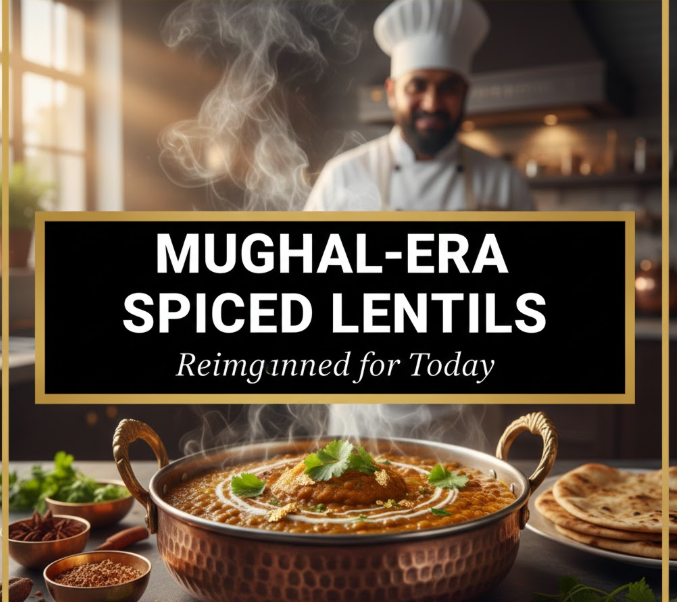
If you look back at Mughal cooking, you’ll notice something interesting: the food wasn’t just about filling the stomach… it was almost like storytelling through spices. And one dish that quietly held its own place during that era was a simple pot of spiced lentils.
Even though the Mughals were famous for rich feasts—biryanis, qormas, breads stuffed with nuts—lentils (or daal) were comfort food for almost everyone in the empire.
Now, imagining that dish in today’s kitchen might feel a bit confusing at first—like, how do you balance ancient flavors with modern life? But that’s the fun part. Let’s break it all down calmly, simply, and with some fresh twists. 😊
Why Lentils Were Special in Mughal Cuisine
Lentils might seem basic now, but they played a practical and even symbolic role back then.
And the reasons were more layered than just “it was cheap.”
They cooked faster than meat
They absorbed spices beautifully
They were filling without heaviness
They worked for royals and common people
They blended easily with seasonal herbs and ghee
There’s something comforting about knowing that centuries ago, people relied on the same humble ingredients we still use.
But the spice mixes? Those were on another level.
Ancient Spice Ideas That Inspired This Recipe
The Mughals were spice collectors. Literally. They brought new ingredients from Persia, traded for others from Central Asia, and blended them with Indian flavors.
Some commonly used spices in Mughal lentil dishes were:
| Spice | Why They Used It | Modern Benefit |
|---|---|---|
| Cumin | Warm aroma & digestion | Reduces bloating |
| Black pepper | Heat & medicinal value | Antibacterial |
| Bay leaf | Royal fragrance | Good for gut |
| Clove | Warm, sweet punch | Fights inflammation |
| Cinnamon | Luxury spice | Balances sugar |
| Mace | Delicate nutmeg note | Improves appetite |
Just look at that lineup.
You realize quickly how “simple lentils” suddenly became a thoughtful dish.
How We Can Reimagine These Lentils Today
Let’s be honest. We don’t have palace cooks.
We don’t slow-cook everything in copper pots.
And we definitely don’t grind spices fresh every single day… unless you’re super fancy 😄
So here’s how we adapt the Mughal style for a modern kitchen:
Use minimal oil but keep the aroma strong
Combine one or two premium spices instead of ten
Add a light creamy touch without making it heavy
Keep the cooking steps quick
Adjust the heat for modern taste
Use simple garnish instead of complicated toppings
Basically: the same spirit, but not the same workload.
A Modern Mughal-Inspired Spiced Lentil Recipe (Very Simple)
This recipe keeps the soul of the dish alive but makes it weeknight-friendly.
Just imagine the smell in your kitchen… it really feels like time traveling through food.
Ingredients (Serves 3–4):
1 cup masoor or moong daal
1 medium onion (finely sliced)
1 tomato (chopped)
1 teaspoon cumin
½ teaspoon cinnamon powder
A pinch of clove powder
½ teaspoon turmeric
1 teaspoon ginger-garlic paste
Salt to taste
1 tablespoon ghee
Fresh coriander
Optional: a splash of coconut milk or fresh cream
Why These Ingredients Work
Cinnamon gives that “royal” fragrance
Clove adds depth without many spices
Coconut milk mimics old Mughal creamy textures
Ghee gives warmth—the Mughals loved it
Turmeric brings color and mild earthiness
Step-By-Step (Super Easy)
Wash the lentils until the water runs clear.
Boil with turmeric and salt until soft.
In another pan, heat ghee.
Add cumin, let it crackle a bit.
Add onions and cook until golden.
Mix in ginger-garlic paste and stir lightly.
Add tomatoes and cook until soft.
Add cinnamon and clove—just tiny amounts.
Combine everything with the cooked lentils.
Add cream or coconut milk if you want it silky.
Simmer for a couple of minutes.
Finish with chopped coriander and a squeeze of lemon.
And that’s it.
You get a dish that feels rustic but also… kind of royal.
How This Version Is Different From Mughal Times
It’s interesting how much changes over hundreds of years.
Just look at this quick comparison:
| Original Mughal Style | Today’s Reimagined Version |
|---|---|
| Usually slow cooked | Quick stovetop cooking |
| Ghee-rich | Light ghee for aroma |
| Wide spice mix | 2–3 essential spices |
| Cooked in copper pots | Any pot works |
| Often served with breads | Works with rice, naan, anything |
The best part?
The modern version is healthier, lighter, and easier—but still rich in flavor.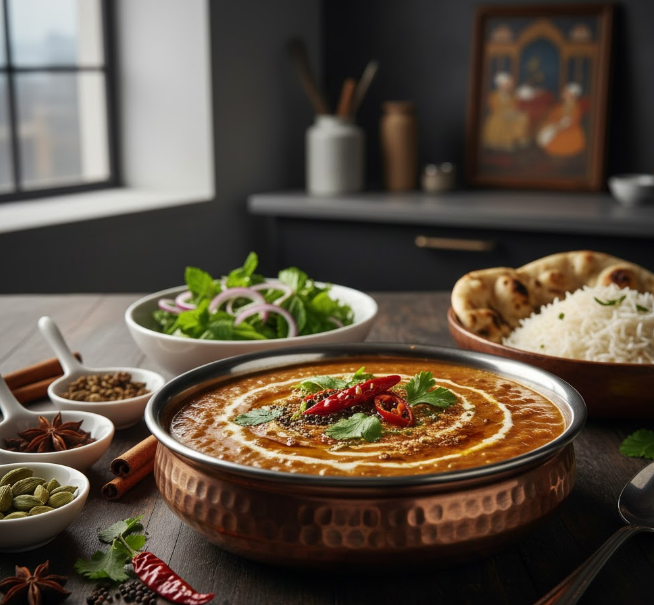
Small Touches to Make Your Lentils Feel “Royal” Again
If you want to elevate your daal without complicating things, try these simple tricks:
Add a drop of rose water at the end (just one drop)
Toast cumin seeds and sprinkle them before serving
Add a swirl of saffron milk if you really want to go fancy
Use a small amount of fried onions as topping
Serve in a deep bowl with warm naan on the side
Tiny details… but they make the dish feel special.
Why This Dish Fits Today’s Lifestyle
Let’s be real: modern cooking is fast, rushed, and sometimes chaotic.
That’s why this recipe is perfect.
It’s cheap
Healthy
Quick
Protein-packed
Comforting
Spice-balanced
Vegetarian-friendly
Slow-cuisine flavor in fast-cuisine time
It’s kind of nice how an ancient dish can still fit today’s pace and still feel meaningful.
Some Unique Historical Notes You Probably Didn’t Know
Here are a few rare, research-backed bits that make Mughal lentil dishes even more interesting:
Mughal cooks used stone slabs to crush spices so the aroma was deeper.
Lentils were often cooked during travel or campaigns because they didn’t spoil quickly.
Royal families preferred lentils during fasting periods.
Some recipes used almond paste for creaminess instead of actual cream.
In winter, they sometimes stirred in dry ginger powder for warmth.
Saffron was added more for aroma than color.
Sometimes daal was served with fruit-based chutneys in royal kitchens.
These details show how flexible and layered the dish really was.
A Few Small Variations You Can Try Today
If you get bored of the basic one, experiment like this:
💡 Smoky Version:
Burn a small piece of coal, place it in a steel bowl inside the pot, drop ghee over it, cover lid for 40 seconds.
💡 Creamy Almond Version:
Blend 6 soaked almonds with 2 tablespoons water, mix into the lentils.
💡 Green Herb Version:
Add mint leaves in the last minute of cooking.
💡 Spicy Warrior Version:
Add crushed black pepper instead of chili powder to mimic old Mughal “heat.”
Nutritional Look (Modern Perspective)
| Nutrient | Approx. Benefit per Serving |
|---|---|
| Protein | 12–14g |
| Fiber | High |
| Healthy fats | Low unless adding cream |
| Iron | Good |
| Spice antioxidants | Strong |
| Calories | 220–300 depending on ghee |
That’s pretty impressive for such an ancient dish.
Final Thoughts
It’s amazing how a dish so old still feels like home today.
These Mughal-era spiced lentils remind us that food doesn’t have to be complicated to be meaningful. A few spices, a bit of heat, some aromas that float around the kitchen… and suddenly you have a bowl that feels warm, comforting, and rich with history.
And honestly, sometimes the simplest meals carry the deepest stories.
If you try this recipe, you’re not just cooking—you’re joining a line of cooks who’ve been making this dish for centuries. Kind of beautiful, right? 😊
FAQs
1. Did the original Mughal lentils use cream or milk?
Not always. Royal versions sometimes used almond paste instead of dairy, which gave a silkier texture.
2. Can I make this dish vegan?
Yes, just replace ghee with oil and skip cream. Use coconut milk for richness.
3. What lentil works best for this recipe?
Masoor or moong are closest to historical versions, but you can use chana daal for a heavier dish.
4. Is this dish spicy?
Not really. Mughal food was more aromatic than “hot.” Heat can be adjusted easily.
5. How long can I store it?
Up to 2 days in the fridge. It tastes even better the next day.
6. What can I serve with it?
Naan, basmati rice, paratha, or even roasted vegetables. Very flexible dish.
