

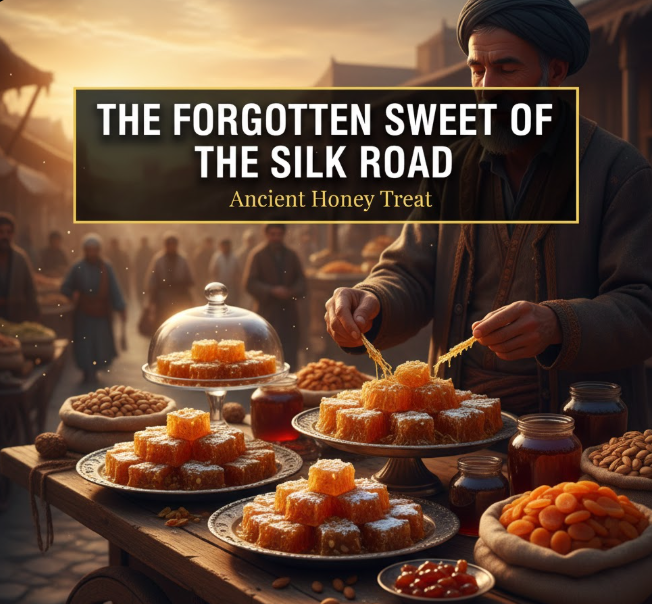
There are many foods we hear about from old history, but every now and then, something surprises us. Something sweet, something warm, something that makes you imagine people thousands of years ago sitting beside a fire, sharing a bite. One such treasure is the Ancient Honey Treat—a forgotten dessert from the Silk Road that almost slipped out of memory.
This treat is not only food; it’s a little piece of travel, culture, and human story… all wrapped in honey. 🍯
What the Ancient Honey Treat Actually Was
The Ancient Honey Treat was a simple mixture of honey, ground nuts, and grain, sometimes shaped into balls or pressed into bars. Think of it like the old ancestor of today’s energy bars—but softer, sweeter, and made with love instead of machines.
Travelers from China to Persia and from Central Asia to Arabia used to carry it because:
It lasted long
It gave quick energy
Honey kept it naturally preserved
It was light to carry
Some versions were crumbly, some chewy, and others surprisingly crispy depending on the region.
Even though recipes changed from place to place, one thing stayed the same: honey was the heart of it.
Why Honey Was So Special on the Silk Road
Honey was not just sweet. It was respected.
People believed honey had healing powers. And honestly… not much has changed. Even today, people use honey for sore throats, energy, and skin care. But back then, honey was like medicine, food, and luxury—all in one.
Here’s why travelers trusted honey so much:
It never spoiled
It kept food safe for long weeks
It boosted energy quickly
It tasted amazing even without cooking
Some old traders even called it “liquid gold.” And for good reason.
Where This Treat Traveled
The treat moved across countries like:
China
Kyrgyzstan
Uzbekistan
Afghanistan
Iran
Turkey
Arabia
Wherever the Silk Road touched, honey recipes appeared.
Sometimes the treat was called “honey cakes,” sometimes “nut honey bites,” and sometimes it had no name at all—just food passed from hand to hand.
A Quick Table Summary of What Was Inside
| Ingredient | Purpose | Fun Fact |
|---|---|---|
| Honey 🍯 | Sweetener + natural preservative | Never expires, even after 1000 years |
| Nuts 🌰 | Energy + protein | Almonds and walnuts were most common |
| Grains 🌾 | Filling + texture | Often roasted for extra flavor |
| Spices ✨ | Aroma + taste | Cardamom, cinnamon, and sesame were favorites |
How People Made It in Ancient Times
There were no stoves like today, no microwaves, and definitely no blenders. Everything was done by hand.
Nuts were crushed with stones
Grain was roasted on a pan over fire
Honey was warmed gently
Everything was mixed in wooden bowls
The mixture was shaped and left to cool
That’s it. No chemicals, no machines, no complicated steps.
Just pure food.
Some cultures added dates. Others added dried grapes or even tiny pieces of fruit. But the base remained the same.
Why It Disappeared Over Time
This part is actually surprising. Something so useful and tasty should have lasted forever, right? But history changed, and so did food habits.
A few reasons:
Sugar became cheaper
New sweets were invented
People wanted softer, fancier desserts
The Silk Road declined
Honey became more expensive in some regions
Slowly, this ancient treat slipped away like a story not told.
But Why Are People Talking About It Again?
Today, something interesting is happening. People want natural, traditional, and healthy foods again.
No chemicals.
No mystery ingredients.
Just real food.
So this sweet from the past suddenly feels new again. People want to know:
What did ancient travelers eat?
What did kings and queens enjoy?
What foods survived deserts and mountains?
Social media is also re-discovering this treat, especially in food history communities. Even modern chefs are adding their own twists.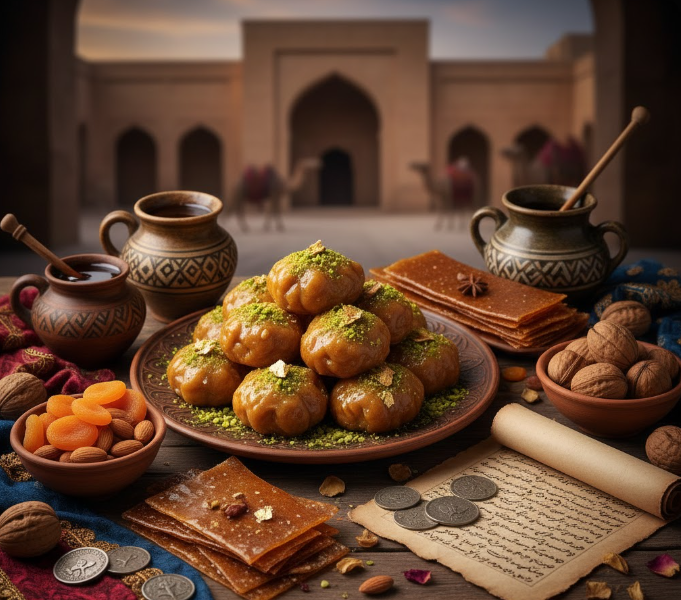
Nutrition Breakdown (Traditional Version)
| Component | Approx. Amount | Why It Matters |
|---|---|---|
| Energy | High | Perfect for long travel or work |
| Natural Sugars | Medium | Comes from honey, not processed sugar |
| Protein | Medium | Nuts add strength and fullness |
| Healthy Fats | Good amount | Keeps body warm and energized |
| Fiber | Moderate | Helps in digestion |
This is why traders, warriors, and travelers loved it. One small piece kept them going.
The Cultural Meaning Behind the Honey Treat
The Ancient Honey Treat wasn’t just food; it was a symbol of:
Hospitality – travelers shared it with strangers
Trade – ingredients traveled across continents
Unity – different cultures added their own flavors
Blessing – honey was seen as pure and holy
Some families made it for celebrations. Others packed it for long journeys. A few even believed it brought good luck.
Food brings people together, and this sweet did that beautifully.
How You Can Make a Modern Version Today
Here’s a very simple version if you want to try it at home (and feel like an ancient traveler 😄):
Ingredients:
1 cup honey
½ cup crushed almonds
½ cup crushed walnuts
½ cup roasted semolina OR crushed oats
A pinch of cinnamon
A pinch of salt
Steps:
Warm honey for 30–40 seconds
Mix in nuts & grain
Add spices
Shape into small balls or bars
Let it cool for 1 hour
That’s it.
No oven.
No fancy tools.
Just real ingredients.
Comparison: Ancient Version vs. Modern Version
| Feature | Ancient Style | Today’s Version |
|---|---|---|
| Sweetener | Only honey | Honey or maple syrup |
| Nuts | Whatever traders found | Almonds, cashews, pistachios |
| Grain | Wheat, barley | Oats, semolina |
| Spices | Rare & costly | Easily available |
| Shelf Life | 2–3 weeks | 1–2 weeks (because no desert climate!) |
Both versions taste amazing, but the ancient one has a deeper “travel story” in every bite.
Interesting Facts That Many People Don’t Know
Honey was once used as currency in some regions
Ancient doctors mixed honey with herbs for healing
Honey was placed in royal tombs
Soldiers carried honey sweets for strength
Some Silk Road merchants believed honey kept the mind sharp
Simple food, but full of wisdom.
Why This Sweet Is Becoming Popular in Europe & Asia Again
Food bloggers are picking up old recipes. Health communities promote honey-based snacks. Travelers want something authentic, not factory-made.
People love things with stories.
They love things with meaning.
And this sweet has both.
It’s healthy, tasty, and connected to one of the greatest trade networks in the world.
Should This Sweet Make a Comeback? (My Honest View)
Yes—absolutely.
Because in a world full of artificial flavors and plastic-wrapped snacks, this treat feels like a breath of fresh air. It’s natural. It’s emotional. And it reminds us that food doesn’t need to be complicated to be good.
Sometimes, the simplest things survive longest.
Sometimes, memories are carried through taste.
And this treat… it deserves a place in our kitchens again.
FAQs
Q1: Is the Ancient Honey Treat the same as modern energy bars?
Not really. Modern bars have preservatives and additives. This treat used only real food—honey, nuts, and grains.
Q2: Did every region make it the same way?
No. Every culture added its own twist. Some added sesame, others used date paste, and some used roasted wheat.
Q3: How long does it last without refrigeration?
If honey content is high, it stays fresh for 10–14 days. In dry climates, even longer.
Q4: Is it safe for children?
Yes, for children above one year old (because babies shouldn’t have honey). It’s natural and nutritious.
Q5: Does it taste very sweet?
It depends on the honey used. Mountain honey gives a mild taste; floral honey tastes sweeter.
Q6: Why did people stop making it?
Sugar became cheap, and new desserts took over. Slowly, the old recipe faded.
