


If you’ve ever wondered what a king from the 1400s actually ate, the truth might surprise you. It wasn’t all giant turkey legs and golden goblets (though yes, sometimes that too). One of the most important foods on a royal table was something much simpler—stew. Thick. Hot. Slow-cooked stew. But the medieval version wasn’t anything like the modern beef stew we know today. It was richer, louder in flavor, and honestly… kind of strange in some ways.
Let’s take a little walk back into the 1400s and recreate what the kings might have enjoyed in their grand halls. 🏰🍲 And trust me, some things will make you think, “They ate THAT?”
Why Stew Was a Royal Favorite
Even kings loved stew because it solved a lot of problems at once. Meat was expensive. Spices were even more expensive. And feeding dozens of nobles in a cold stone castle was a daily challenge. A huge pot of stew made things easier because:
It kept warm for hours
It used leftover meat and bones
It blended expensive spices into something sharable
It smelled amazing in giant halls
It was easy to serve to a lot of people
Kings didn’t usually eat the same stew as the servants, of course. Royal stews were richer, sweeter, spicier, and full of ingredients that everyday people couldn’t even dream of touching.
Ingredients You Would Find in a Medieval Royal Stew
When we talk about “royal food,” it’s not about quantity—it’s about rarity. A 1400s stew for a king often included surprising things like:
Venison (deer meat)
Swan 🦢
Peacock (yes, really)
Rabbit
Mutton
Almond milk
Rare spices like saffron, cinnamon, ginger
Dried fruits like raisins or prunes
Wine or vinegar
The combination of sweet + spicy + rich was extremely popular back then. Modern people might find it unusual, because imagine beef cooked together with cinnamon, raisins, and cloves. That was normal for them.
The Role of Spices in Royal Stews
Spices were a symbol of luxury. In the medieval world, spices weren’t just flavor—they were status. Being able to serve saffron or cinnamon in a stew meant you could literally show your power on a plate.
A single pouch of saffron could cost more than a craftsman earned in weeks. And kings used it casually in their cooking. Why? Because bright yellow food made with saffron looked richer and more “royal.”
Here’s a quick look at spice value back then:
| Spice | Value in the 1400s | Why It Was Special |
|---|---|---|
| Saffron | Extremely expensive | Added golden color, luxury signal |
| Cinnamon | High-value import | Sweet flavor for royal dishes |
| Pepper | Worth its weight in silver at times | Symbol of wealth |
| Cloves | Hard to get | Used in fancy feasts |
| Ginger | Imported from Asia | Only elites could afford |
Even today saffron is pricey—but imagine it in a world without airplanes or shipping containers. These spices traveled across deserts, oceans, and dangerous trade routes. Only a king could afford them freely.
How a Royal Stew Was Cooked in the 1400s
Castle kitchens were chaotic places. Huge fires, enormous pots, and dozens of workers. The stew pot was usually so big you could fit a grown person in it (not recommended, obviously).
The typical process went like this:
Fire heated early in the morning
Bones and tougher meats added first
Herbs and spices thrown in
Almond milk or wine poured to thicken
Fresh herbs, fruits, or soft meat added near the end
Stew would simmer for hours, and the longer it cooked, the better it tasted. Some large kitchens kept stew pots going for days—they would just add fresh ingredients as needed.
Recreating a Medieval King’s Stew Today
Now, we won’t be cooking swan or peacock—don’t worry. But you can recreate the idea of a medieval stew using simple ingredients.
Here’s a modern version inspired by royal kitchens:
| Ingredient | Modern Replacement | Medieval Purpose |
|---|---|---|
| Venison | Beef or lamb | Rich flavor |
| Almond milk | Regular almond milk | Thick, creamy base |
| Raisins or prunes | Same | Sweetness |
| Saffron | Optional (or turmeric) | Color |
| Wine | Red or white wine | Depth and acidity |
| Spices | Cinnamon, ginger, pepper | Classic medieval blend |
The flavor is warm, sweet, savory, and slightly spiced—almost like a mix between stew and dessert. This might sound strange, but kings in the 1400s absolutely loved this kind of mix.
Strange Things Kings Added to Their Stews
Royal cooks had no fear. They put things into stews that today might make you blink twice. Here’s a list of some surprising additions:
Rose petals
Sandalwood
Quail eggs
Pork fat for richness
Entire spice bundles tied with cloth
Fish mixed with fruit (yes… that happened)
This might look wild, but medieval taste was different. Many dishes today (like sweet and sour chicken) still mix sweet with savory.
Why Almond Milk Was Used Instead of Dairy Milk
One fun fact: medieval kitchens used almond milk more than cow’s milk, especially in royal dishes. Why? Because:
Regular milk spoiled fast
Almond milk was seen as “cleaner”
It lasted longer in cold castles
It added a soft, rich flavor
This made stews thicker and smoother. The kings enjoyed this texture because it felt “luxurious.”
What a Royal Feast Looked Like
A king didn’t just eat stew alone. The stew was part of a huge meal, usually served in “courses”—but not courses like we know today. Each course had 10–12 dishes at once!
Imagine sitting at a long table and seeing:
Stew
Roasted meats
Sweet pastries
Exotic fruits
Meat pies
Herbal soups
Spiced wine
All served together. The stew was not a side dish—it was the “comfort food” of medieval royalty.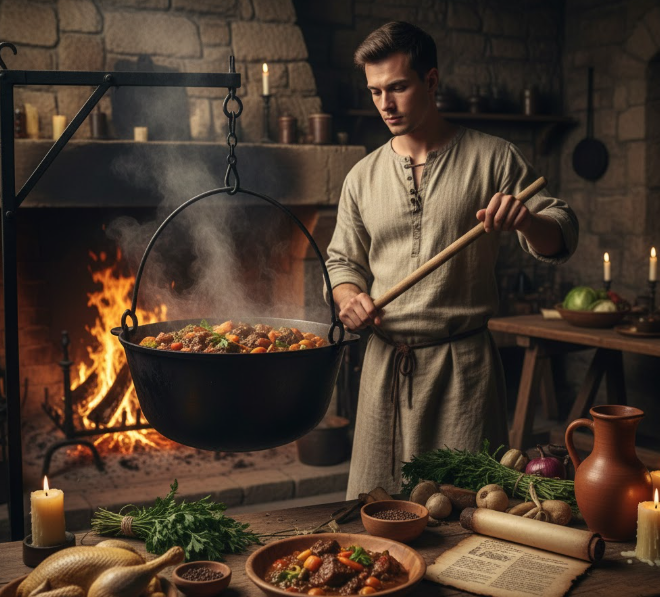
A Glimpse Into Royal Dining Customs
Kings did not usually taste the food first. Poison was a real concern, so food tasters were used.
Also:
Kings ate with knives and fingers (forks weren’t popular yet)
Bread was used as a plate
Napkins were sometimes giant tablecloths
People wiped hands on their clothes during meals 😅
Not very royal by today’s standards, but normal back then.
How Modern Stew Differs From Medieval Stew
Here’s a quick comparison:
| Feature | Medieval Royal Stew | Modern Stew |
|---|---|---|
| Spices | Very heavy | Mild |
| Sweetness | Often sweetened | Rarely sweet |
| Meat | Game meats (deer, rabbit) | Beef, chicken |
| Thickening | Almond milk, bread | Flour, cornstarch |
| Purpose | Show wealth | Home comfort food |
So if you ever try cooking a medieval stew today, expect it to taste like a mix of savory and sweet with warm spices.
Why Medieval Food Tasted So Different
People in the 1400s didn’t have sugar the way we do today. Honey and dried fruits were the main sweeteners. They also believed spices were good for health, digestion, and even protecting the body from illness.
So medieval cooks combined things for both taste and “health beliefs.” If a king was sick, he was usually given heavily spiced stews with ginger or cinnamon.
Personal Tip for Trying Medieval-Style Stew at Home
If you want a beginner-friendly version, try this:
Beef or lamb
A handful of raisins
A splash of red wine
A bit of ginger
Pepper
Almond milk to finish
Cook slow. Add small amounts of spice first. Taste. Adjust. Medieval cooking wasn’t about exact recipes—it was about experimenting.
FAQs
1. Did kings really eat peacocks and swans?
Yes, especially during feasts. Sometimes the cooked peacock was served back inside its feathered skin for decoration.
2. Why did they mix sweet and savory flavors?
It was fashionable and seen as a sign of wealth. Spices and dried fruits were expensive, so using them showed status.
3. Was medieval stew healthy?
It depended. Some versions were nutritious, while others were extremely heavy with fats and spices.
4. What did ordinary people eat instead of royal stew?
They ate simpler stews with cabbage, oats, cheap meat scraps, onions, and herbs. No saffron or cinnamon.
5. How did they keep stew warm in huge castles?
Large fireplaces and thick clay pots helped keep stew hot for hours.
6. Why did kings use almond milk instead of cow milk?
Almond milk spoiled slower, tasted richer, and didn’t curdle in hot stews.
7. Did kings eat three meals a day like we do?
No. They usually had a big midday meal and a lighter evening one.
