

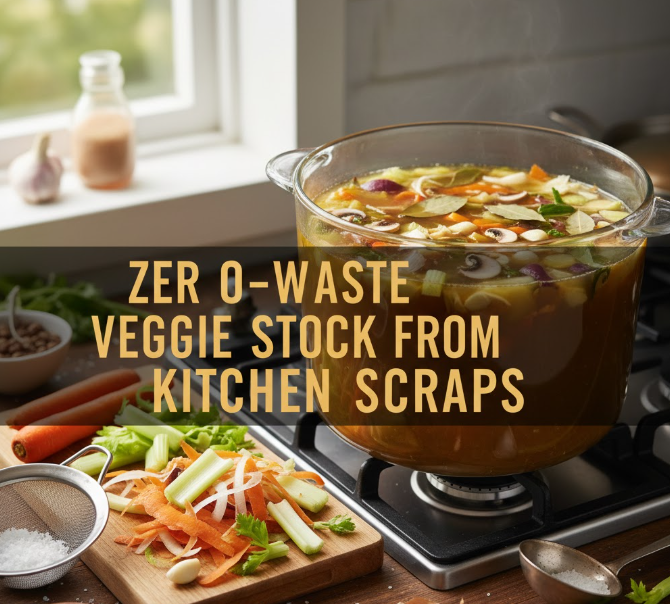
Have you ever thought about tossing out carrot peels, onion skins, or broccoli stems? 🤔 What if I told you these scraps could make one of the most flavorful, nutritious, and money-saving ingredients in your kitchen—veggie stock! Making stock from kitchen scraps is not just eco-friendly; it’s smart cooking.
Why Make Veggie Stock from Scraps?
Reduce Waste: Every peel, stalk, or skin can be transformed into a rich, savory stock.
Save Money: No need to buy store-bought broth. Your kitchen scraps are free!
Boost Nutrition: Vegetables have vitamins and minerals that leach into the stock.
Add Flavor: Homemade stock tastes fresher and more vibrant than canned alternatives.
What Can You Use for Your Zero-Waste Stock?
Here’s a quick guide on what scraps are perfect for stock:
| Vegetable Scrap | Use in Stock | Note |
|---|---|---|
| Carrot peels & ends | Yes | Adds sweetness |
| Onion skins & trimmings | Yes | Gives color & depth |
| Celery leaves & ends | Yes | Classic stock flavor |
| Mushroom stems | Yes | Earthy umami flavor |
| Garlic skins & cloves | Yes | Subtle aroma |
| Pepper cores | Yes | Light spice, optional |
| Herb stems (parsley, thyme) | Yes | Fresh herbal notes |
| Potato peels | Sometimes | Use sparingly, can cloud stock |
| Tomato ends & cores | Yes | Slight acidity, good for red sauces |
Step-by-Step Guide to Making Your Veggie Stock
Collect Your Scraps:
Keep a small container in your fridge for vegetable scraps. Every time you cook, add peels, stems, and cores. 🍅🥕Wash & Clean:
Quickly rinse your scraps to remove dirt or pesticides. No need to peel organic scraps—they add nutrients and color!Cook the Stock:
Add all scraps to a large pot.
Cover with water (around 6-8 cups for a medium batch).
Optional: Add spices like bay leaves, peppercorns, or a dash of salt.
Simmer for 45–60 minutes.
Strain & Store:
Strain the stock using a fine mesh or cheesecloth.
Let it cool, then store in airtight containers.
Freeze in small portions for convenience. 🥶
Tips for Extra Flavor
Roast vegetable scraps in the oven for 20 minutes before simmering to bring out deep flavors. 🔥
Use cold water to start simmering; it helps extract more nutrients.
Mix different vegetable scraps for unique taste combinations.

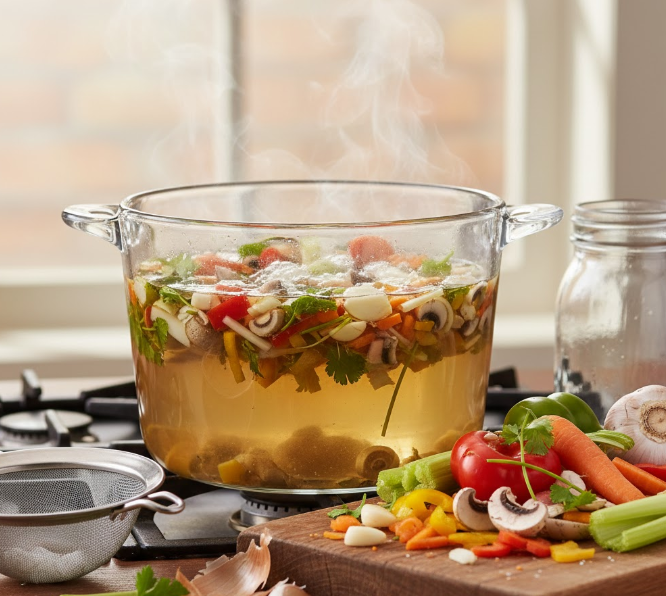
Benefits of Zero-Waste Cooking
Environmental Impact: Less waste in landfills = less methane gas 🌎.
Healthier Lifestyle: Homemade stock has no preservatives, additives, or excess sodium.
Creative Cooking: Encourages experimenting with flavors.
Ideas to Use Veggie Stock
Soups and stews 🍲
Risotto or rice dishes 🍚
Sauces and gravies 🍝
Cooking grains like quinoa or barley
Storage Guide
| Method | Duration | Tip |
|---|---|---|
| Fridge | 4–5 days | Keep in airtight container |
| Freezer | 3–4 months | Use ice cube trays for portioning |
| Canning | 6–12 months | Sterilize jars properly |
FAQs About Zero-Waste Veggie Stock
Q: Can I use all vegetable scraps?
A: Most are fine, but avoid bitter vegetables like broccoli leaves or cauliflower stalks in large amounts. They can overpower the stock.
Q: Should I add salt while cooking?
A: It’s better to skip salt during cooking. Add it when using the stock in recipes. This keeps the stock versatile.
Q: Can I reuse scraps multiple times?
A: No, once they release their flavor, the stock will be weak. Best to use fresh scraps each time.
Q: How long does homemade stock last?
A: In the fridge, 4–5 days; in the freezer, up to 3–4 months. Always label your containers!
Q: Can I make stock with frozen scraps?
A: Absolutely! Freezing scraps until you have enough is a great way to avoid waste. Just rinse before simmering. ❄️
Extra Tricks for Flavor Boost
Add a splash of soy sauce or miso for umami.
Include lemon peels or a pinch of dried chili for a subtle zing.
Save onion and garlic skins—they add beautiful golden color naturally.
Final Thoughts
Zero-waste veggie stock is more than just a trend—it’s a lifestyle choice that benefits your health, your wallet, and the planet. 🌱 By turning everyday scraps into a flavorful stock, you’ll start to see your kitchen in a whole new way. It’s simple, satisfying, and surprisingly fun.
So next time you chop vegetables, don’t toss those peels and stems. Collect them, simmer them, and let them transform into a delicious homemade stock. You’ll wonder how you ever cooked without it!
