

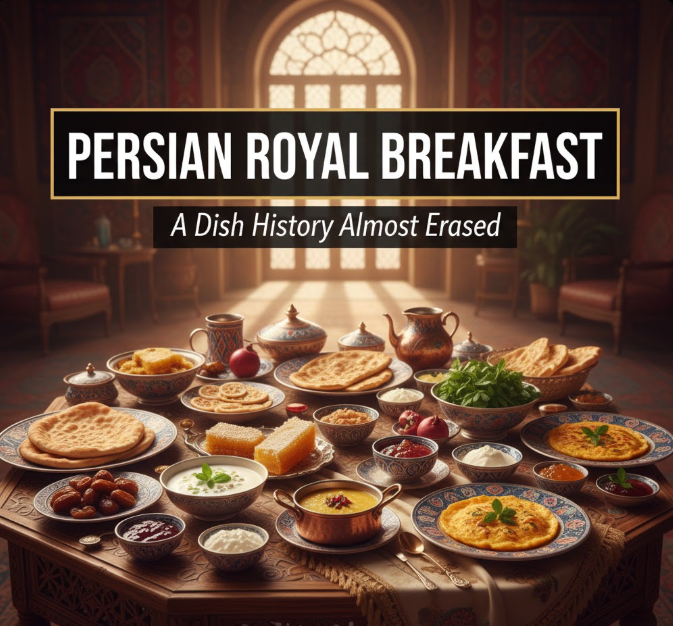
There are some foods that stay alive in people’s memory even when time tries to hide them. The Persian royal breakfast is one of those dishes. It was once served in shining halls, under golden lamps, to kings who began their day with a sense of pride, comfort, and calm. Today… most people have never even heard of it. And that’s the strange part — a food so rich in story almost disappeared.
When you look at ancient Persian traditions, breakfast was not just the first meal. It was a quiet ritual. Something that prepared the mind, warmed the body, and reminded the royals of their connection to nature. And yes, believe it or not, this elegant meal was often very simple at heart.
Let’s walk through what made this breakfast so special — and why it faded away.
What Exactly Was the Persian Royal Breakfast?
In old Persia, food was always connected with balance. A king could not start his morning with anything heavy. They believed the body woke up slowly, like a flower opening, and the breakfast should match that softness.
The royal breakfast usually included:
Fresh flatbread still warm from clay ovens
Honey that came from special Persian gardens
Clotted cream called “Sarshir,” smooth and thick
Mulberries, dried dates, or figs
Light stews made from lentils or soft herbs
Saffron milk or rosewater drinks
Most of these foods still exist, but the original combination and the quiet ritual behind them are rarely practiced today.
Why Was This Breakfast So Important?
Back then, food reflected personality. A calm, balanced breakfast meant a calm, balanced ruler. Persian kings believed that the first meal guided their decisions for the whole day. If the stomach was clean and light, the mind would be sharp and fair.
Also — and this part is easy to forget — breakfast tables were moments of peace. Royal families sat together without the noise of crowds or politics. Just food, soft music, and a feeling of blessing.
Rare Ingredients That Made It “Royal”
Some ingredients were only available to kings because they required very careful handling. Here’s a small table to show how special they were:
| Ingredient | Why It Was Rare | What Made It Royal |
|---|---|---|
| Saffron Milk | Took thousands of flowers to make | Symbol of purity and intelligence |
| Sarshir Cream | Made from slow-heated milk | Reserved for royal and noble homes |
| Wild Honey | Came from remote Persian mountains | Given to kings for healing energy |
| Rosewater Drinks | Distilled in copper pots | Used in royal ceremonies and meals |
These foods were chosen because they lifted mood, gave gentle strength, and kept the body cool — something very important in Persian medicine.
How This Tradition Slowly Disappeared
You might wonder: if this breakfast was so important, how did it almost vanish?
Well, history is full of wars, invasions, and cultural changes. Each time Persia was taken over by another empire, royal foods shifted. Some dishes were replaced, some simplified, and others disappeared because ingredients became expensive or hard to find.
Later, modern lifestyles pushed long, calm breakfasts away. People became busier. The royal breakfast, being slow and delicate, simply didn’t fit a fast life. And slowly… it slipped into silence.
Rediscovering the Lost Ritual 🕊️
Today, chefs and Persian historians are trying to bring this breakfast back. Not in grand palaces — but in homes.
There is a quiet beauty in preparing a meal that your great ancestors might have eaten. Something about it makes the morning feel more meaningful.
If you want to recreate a simple version at home, here’s a very easy table:
| Item | Modern Replacement | Taste |
|---|---|---|
| Sarshir cream | Thick fresh cream | Smooth, rich |
| Saffron milk | Warm milk + a pinch of saffron | Lightly floral |
| Ancient bread | Whole wheat flatbread | Warm, earthy |
| Wild honey | Any natural raw honey | Sweet and natural |
You don’t need a palace. Just a few calm minutes.
Why This Meal Still Matters Today
There’s a lesson hidden inside the royal breakfast. And it’s surprisingly modern:
Eat slowly
Keep mornings peaceful
Choose simple foods
Start your day with balance
Respect nature’s ingredients
And that’s maybe the part that was almost erased — not the food itself, but the wisdom behind the food.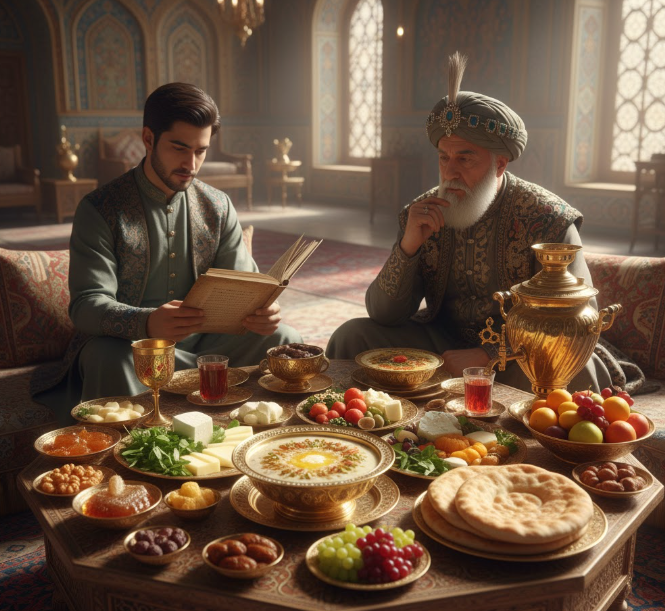
A Quiet Story From Historians
One Persian historian wrote about kings eating breakfast near open windows, where garden air mixed with the smell of warm bread. He said the morning felt “holy but simple.” That line alone tells us something: the beauty of the breakfast was never in the gold bowls… it was in the calmness that followed it.
The Royal Breakfast in Today’s Culture 📜
It’s interesting how in many countries people have adopted parts of this breakfast without knowing its origin. For example:
Saffron milk before bed
Fresh flatbread mornings
Honey with warm drinks
Rosewater sweets
All of these came from old Persian customs. But the full breakfast itself — the ritual, the intention, the slow pace — is still rare today.
A Quick Comparison Table: Then vs. Now
| Feature | Ancient Royal Breakfast | Modern Breakfast |
|---|---|---|
| Eating pace | Slow, mindful | Fast, rushed |
| Ingredients | Pure, natural, seasonal | Packaged, quick |
| Purpose | Balance and clarity | Just energy |
| Atmosphere | Calm, family-centered | Often alone |
| Drinks | Rosewater, saffron milk | Tea, coffee |
It’s surprising how much has changed.
Why The History Was Almost Lost
Some reasons the story almost disappeared:
Lack of written recipes
Royal chefs kept secrets
Wars destroyed archives
Modern food replaced old rituals
Global cuisines blended everything
But history survives in memories, and now, in research and restored recipes.
A Human Moment in All This 🍃
Sometimes, when people talk about ancient royalty, everything sounds grand. But this breakfast gives us a different picture. It shows kings as humans — waking up slowly, wanting warm comfort, sharing food with their families. Something about that makes them feel closer and more real.
How You Can Try It Yourself
You can create a simple Persian-inspired morning by combining:
Warm flatbread
Honey
Fresh cream
A few nuts or dates
Warm milk with saffron
Sit near a window. Take small bites. Give yourself a quiet start.
It feels different — softer, somehow.
Common Myths
“Royal breakfast must be heavy.”
Actually, it was very light.
“Only the rich could eat these foods.”
Some ingredients were royal-only, but many families used similar items in simpler forms.
“It disappeared completely.”
Not fully. Pieces of it survived in Persian households.
FAQs
Q1: Why was saffron so important in Persian breakfasts?
Saffron was believed to sharpen the mind and lift mood. It was a symbol of purity and royalty.
Q2: Is Sarshir cream the same as modern clotted cream?
They are similar, but Sarshir was made more slowly and had a richer texture.
Q3: Was meat ever served in Persian royal breakfast?
Rarely. Breakfast was supposed to be light for digestion.
Q4: Can this breakfast be made without expensive ingredients?
Yes. Even simple milk, honey, fruits, and bread capture the spirit.
Q5: Why did this tradition almost disappear?
Because of cultural changes, wars, and the rise of fast lifestyles.
Final Thought
The Persian royal breakfast may not return in its full ancient form — and maybe it doesn’t need to. What matters is the idea behind it: start your day with calmness, simple food, and a moment to yourself. A quiet ritual that once shaped kings can still shape us today.
