

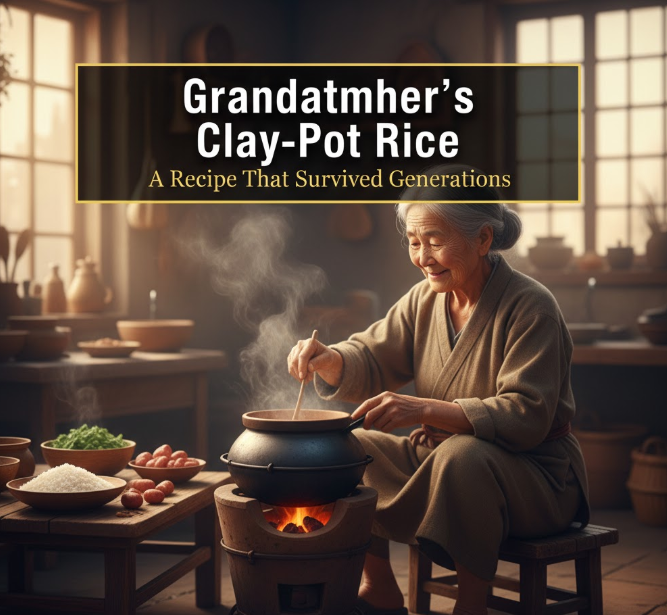
There are some dishes that don’t just fill the stomach — they fill a whole room with stories. Grandmother’s Clay-Pot Rice is one of those dishes. I grew up watching her cook it with a slow and steady hand, almost like she was talking to the pot itself. And honestly, it always amazed me how such simple ingredients turned into something so comforting. Something that tasted like home.
The recipe might look old, maybe even too simple at first glance, but trust me… inside that simplicity lives decades of skill, trial, error, and love. This dish survived generations because it works — and because every family that tries it adds a little bit of their own heart.
Let’s walk through the story, the method, and the little secrets that make this recipe feel alive even today. 🌾🔥
Why This Dish Survived for So Long
There are hundreds of rice recipes… but clay-pot rice has a different charm. Here’s why it kept traveling from grandmother to mother, to us:
It uses basic ingredients — nothing fancy or expensive.
Clay pots add natural flavour that metal pans simply can’t.
It keeps you full for long since it’s slow-cooked and rich.
Easy to remember — grandmothers didn’t need measuring cups.
Works for every season — warm for winters, mild for summers.
It feels emotional — the taste reminds you of home instantly.
Honestly, the real reason is simple: it’s delicious and comforting. Sometimes, that’s enough for a recipe to live forever.
The Heart of the Dish: The Clay Pot
Before we talk ingredients, a small truth: the pot matters. A lot.
Clay pots are slightly unpredictable. Sometimes they heat up fast, sometimes slow; sometimes they crack a tiny bit at the bottom (grandmothers called it “character,” by the way 😄). But every clay pot adds a smoky, earthy depth that modern cookware rarely gives.
Here’s a small comparison to understand it better:
| Cookware Type | Heat Retention | Taste Quality | Traditional Feel | Best For |
|---|---|---|---|---|
| Clay Pot | Slow & even | Earthy, smoky | ⭐⭐⭐⭐⭐ | Clay-pot rice |
| Steel Pot | Fast | Neutral | ⭐⭐ | Daily cooking |
| Nonstick Pan | Medium | Artificial-neutral | ⭐ | Quick meals |
| Cast Iron | Strong | Heavy flavour | ⭐⭐⭐ | Grilling, frying |
Clay, somehow, feels alive — as if it participates in the cooking.
Ingredients That Stayed the Same for Decades
Every generation had its own kitchen style, but this recipe barely changed. And maybe that’s the magic.
2 cups washed rice (not basmati — short or medium grain works best)
3 cups water (or enough to cover rice by one knuckle — grandmother style)
1 cup small-cut chicken or beef (optional)
A handful of vegetables (peas, carrots, potatoes — up to you)
1 medium onion (sliced)
Salt to taste
1 tsp crushed black pepper
1 tbsp oil or ghee
A tiny piece of ginger
Few garlic cloves (optional but amazing)
Simple, right? But simplicity doesn’t mean lack of flavour… especially when cooked slowly.
How Grandmother Cooked It (Step-by-Step but Human Style)
Whenever grandmother started cooking, she talked to herself softly. Something like, “Slowly… don’t hurry… food listens.” And maybe food does listen, because this dish needs patience more than anything else.
Here’s the exact style she followed:
1. Preparing the clay pot
She soaked the pot in water for 10–15 minutes.
This prevents cracking and gives a gentle moisture to the pot walls.
2. Heating the base
She added a spoon of oil, then placed onions to soften. They didn’t need to brown fully — just turn golden.
3. Adding the meat (if any)
She placed chicken pieces and let them cook until lightly white.
No high flame, no rushing — just slow stirring.
4. Vegetables next
Potatoes always went in first because they cook slower.
Peas and carrots joined later.
5. Adding rice carefully
She never mixed the rice after adding water.
“Rice likes peace,” she said.
So she spread it flat and poured water gently.
6. The magic simmer
The lid went on.
The flame went low.
Nobody touched the pot for 20–30 minutes.
And honestly, that silence felt special.
The kitchen smelled warm and earthy.
7. The crust at the bottom 🍚🔥
Clay-pot rice is famous for the crispy layer at the bottom.
Grandmother called it “the crown” — the best part.
You get it by letting the rice rest on low heat for a few minutes after cooking.
Little Secrets Only Grandmothers Know
These small “hidden rules” kept the dish perfect every time:
Never stir rice after adding water.
Add a few drops of oil before covering the pot to prevent sticking.
Let the pot rest even after turning the flame off.
(Steam finishes the cooking.)Don’t open the lid repeatedly.
The rice loses its calm — and texture.Use fresh water, not cold or hot, to maintain even cooking.
These things look small but change the whole result.
Why Clay-Pot Rice Tastes Different
If you’ve ever tasted it, you already know: it has a warm, cozy, balanced flavour that feels ancient. Like something created long before modern recipes became complicated.
Here are a few reasons why:
| Reason | What It Does |
|---|---|
| Clay breathes | Helps rice cook evenly |
| Natural minerals | Add a soft earthy tone |
| Slow cooking | Enhances aroma |
| Closed moisture | Makes rice softer |
| Bottom crust | Adds texture & depth |
This combination is what makes clay-pot rice feel… alive.
A Short Story From the Old Kitchen
There’s a moment I still remember.
Once the pot cracked slightly while cooking, and I panicked. Grandmother just smiled and said:
“It’s okay. Old things break a little but still work perfectly. People should learn from pots.”
And somehow the rice turned out even better that day.
Food isn’t just food in these old recipes — it’s wisdom disguised as dinner.
Modern Version (If You Don’t Have a Clay Pot)
Of course, not all of us have a traditional clay pot today.
But you can still come close with these:
Use a heavy-bottom pot
Keep the flame low
Let the rice rest after cooking
Don’t stir
A steel pot won’t give the exact same flavour, but the comfort remains.
Nutrition Table (Approx.)
| Nutrition (Per Plate) | Amount |
|---|---|
| Calories | 290–350 |
| Carbohydrates | 55g |
| Protein | 8–15g (with meat) |
| Fat | 5–8g |
| Fiber | 2–3g |
| Minerals | High due to clay absorption |
It’s a balanced, gentle meal — perfect for any age.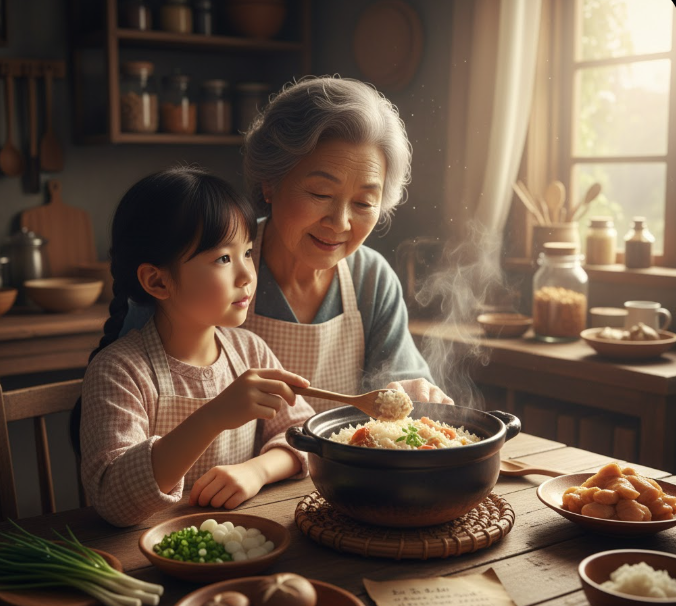
Why Families Still Cook It Today
You might wonder, with modern rice cookers and ready-made mixes everywhere… why do families still make this older recipe?
Here’s why:
It brings back memories
It tastes deeper and richer
The process feels calming
It gathers everyone at the table
Kids love the crispy bottom layer
No need for fancy spices or techniques
It fits tight budgets
It feels traditional, grounding, and warm
Sometimes, slow food is the best food.
Serving Ideas (My Favorite Part 😋)
Add a fried egg on top
Serve with yogurt and cucumbers
Pair with pickles or chutney
Add roasted nuts for crunch
Drizzle a little ghee for aroma
Serve straight from the pot for extra nostalgia
Food looks more lovable when served simply.
Tips to Make It Taste Like Grandmother’s Version
Use medium-grain rice (not too long, not too short)
Keep ingredients minimal
Don’t over-season
Allow natural flavours to shine
Cook with patience
Let the pot “rest” after turning off the flame
Keep the lid tightly closed during cooking
Trust me — these tiny details matter.
FAQs
1. Can I make clay-pot rice without meat?
Yes, absolutely! It tastes amazing with just vegetables or even plain onions.
2. Why does my rice turn mushy?
You probably added too much water or stirred it. Keep the rice calm while cooking.
3. How do I get the crispy bottom layer?
Let the rice cook on low heat for a few minutes after it’s done. Don’t open the lid too early.
4. Does soaking the clay pot really matter?
Yes, it prevents cracking and helps maintain steady moisture.
5. Can I cook this on an electric stove?
Yes — just make sure to keep the heat low and steady.
6. Can I store this rice?
Yes, but it tastes best fresh. The crust disappears after refrigeration.
7. Why does clay-pot rice taste “earthy”?
Because clay naturally enhances aroma and absorbs flavours slowly.
Final Thoughts
Grandmother’s Clay-Pot Rice isn’t just a recipe — it’s a living memory.
A quiet reminder that good things take time.
And that even simple ingredients can create something unforgettable.
When you cook this dish, you don’t just make food…
you keep a piece of history alive in your kitchen. 💛
If you ever feel homesick, tired, or just want something calming — try this recipe. You’ll feel the warmth of generations inside every spoon.
