

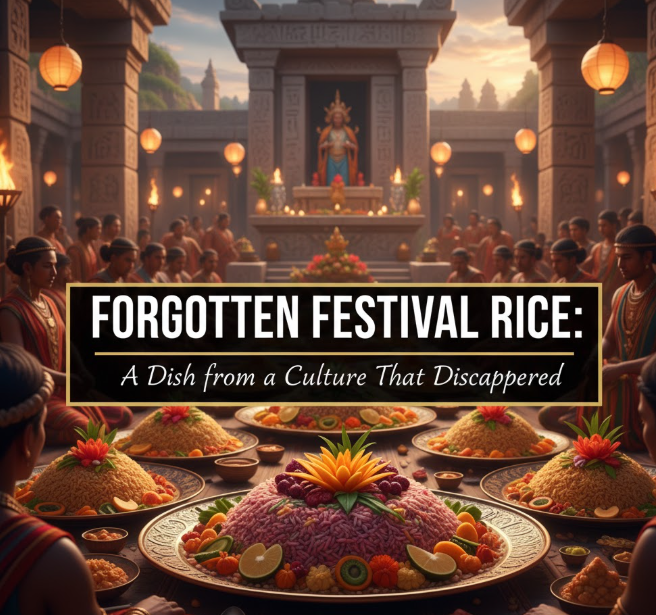
Food has a way of carrying stories from the past. Some dishes are famous and traveled the world, like pizza 🍕 or sushi 🍣. Others, however, are whispers from a time long gone, shared only in memory or old journals. One such dish is the Forgotten Festival Rice—a recipe from a culture that doesn’t exist anymore. It’s not just food; it’s a glimpse into the life, celebrations, and traditions of people who are gone.
What Was Forgotten Festival Rice?
Forgotten Festival Rice was a special dish prepared only during festivals and important celebrations. Unlike everyday rice dishes, this one was layered with meanings and ingredients that symbolized prosperity, health, and happiness. Families would spend hours preparing it, and each ingredient had a story.
Base Rice: Usually, a fragrant, long-grain rice was used.
Herbs & Spices: Ingredients like saffron, turmeric, and cardamom were common. They not only added flavor but also represented purity and wealth.
Nuts & Fruits: Almonds, dried dates, and rare berries were added as symbols of abundance.
Special Sauce: A lightly sweet, nutty sauce bound the rice together, making it unique to the festival.
Why Was It Important?
This dish was not about taste alone. It was a celebration of culture, community, and seasons. People believed eating it brought good luck and strengthened social bonds. During festivals, neighbors and relatives would gather around, and everyone shared this rice as a sign of unity.
Ingredients with Meaning
| Ingredient | Symbolism/Meaning | Fun Fact 🍀 |
|---|---|---|
| Saffron | Wealth and luxury | One of the most expensive spices in history |
| Almonds | Longevity and prosperity | Almond trees were sacred in their rituals |
| Dates | Sweetness and happiness | Dates were offered to guests as blessings |
| Cardamom | Purity and protection | Used in ceremonial drinks too |
| Long-grain rice | Fertility and life | Each grain symbolized a year of abundance |
How It Was Made
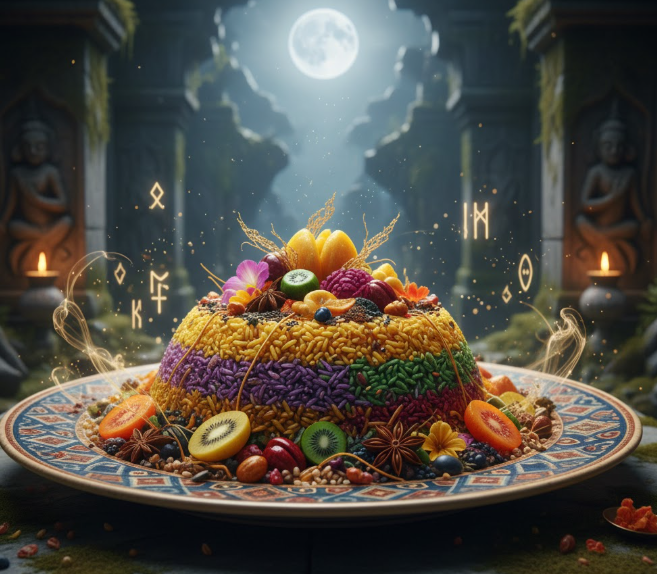
Making Forgotten Festival Rice was an event in itself. Preparation started a day or two before the festival. The rice had to be soaked perfectly, the nuts roasted just right, and the sauce simmered slowly. Here’s a simplified step-by-step idea:
Soak the rice: Overnight soaking ensured fluffy grains.
Prepare nuts and fruits: Roast almonds lightly, chop dates and berries.
Cook rice gently: Add spices like saffron and cardamom to boiling water.
Mix with special sauce: A combination of ghee, honey, and crushed nuts created a delicate sweetness.
Layering: Often, families layered the rice with nuts and fruits for visual beauty.
Serving: Served on large plates, shared among family and friends, often accompanied by herbal drinks.
Cultural Significance
The people who made this dish valued ritual, community, and the seasons. Festivals marked the change of seasons, the harvest, and religious observances. Forgotten Festival Rice became a symbol of gratitude—thankfulness for the harvest, for family, and for life itself.
Why Did This Culture Disappear?
Historians believe the culture faded due to a combination of migration, conflict, and modernization. With the disappearance of the community, many of their culinary traditions, including this rice dish, were lost. Only scattered records in old manuscripts, oral stories, and rare cookbooks preserve its memory.
Modern Relevance
Today, food historians and chefs are trying to revive such forgotten dishes. They experiment with ingredients, sometimes using modern substitutes, to keep the spirit alive. Some cooking schools even teach “Lost Recipes” classes, focusing on dishes like Forgotten Festival Rice to connect students with history.
Interesting Facts
The dish was often decorated with edible flowers 🌸 to honor nature.
Families would pass down special spoons or bowls used only for this rice.
Children were taught the story of each ingredient—it was as much about education as it was about food.
Tips to Recreate Forgotten Festival Rice Today
Even if the original recipe is lost, you can attempt a version at home:
Use fragrant rice like Basmati or Jasmine.
Experiment with nuts and dried fruits that are available locally.
Add spices carefully—saffron is key if possible, but turmeric and cinnamon work too.
Layer and present beautifully; it’s part of the tradition.
FAQs
Q1: Can I make this dish vegan?
Yes! Replace ghee with coconut oil or vegan butter, and honey with maple syrup. The taste will differ slightly but retain the festive spirit.
Q2: Why is it called “Forgotten” Festival Rice?
It is called “Forgotten” because the original community that created it no longer exists. This dish is one of the few remnants of their culture.
Q3: Are there modern dishes inspired by it?
Some chefs in historical cuisine circles have created dishes like Festive Nut Rice or Herbal Saffron Pilaf, inspired by this recipe.
Q4: Can it be stored for later?
Yes, but it’s best eaten fresh. Nuts can get soft, and the fragrant aroma fades. Reheating gently with a little water helps.
Conclusion
Forgotten Festival Rice is more than food—it’s a story, a memory, and a cultural artifact. While the people who created it have vanished, the dish survives as a reminder that food carries history 🍚. Every bite can teach us about celebration, gratitude, and the beauty of traditions we should never forget.
In today’s fast-paced world, recreating or even tasting such recipes allows us to pause, reflect, and honor those who came before us. Forgotten Festival Rice is a dish that asks us to remember, not just eat.
