

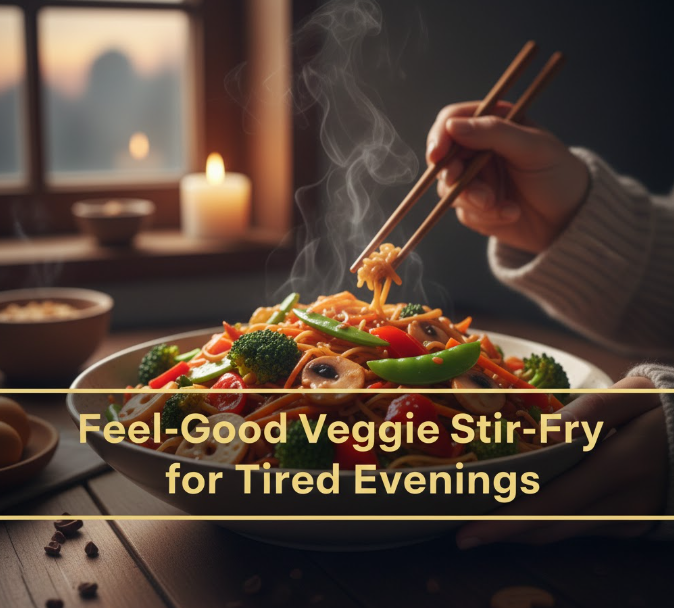
After a long, exhausting day, the last thing you want is to spend hours cooking. 🍳 But that doesn’t mean you have to compromise on taste or nutrition. A veggie stir-fry is quick, simple, and makes your evenings feel a little lighter. It’s vibrant, healthy, and can lift your mood even when energy is low.
Why Veggie Stir-Fry Is Perfect for Tired Nights
Veggie stir-fry is a lifesaver because it combines vegetables, flavor, and speed. You get your daily dose of vitamins, minerals, and fiber without spending too much time in the kitchen. Plus, the sizzle of fresh veggies hitting a hot pan is somehow satisfying—it makes cooking feel like less of a chore.
What Makes a Stir-Fry Feel-Good?
It’s all about balance. 🥦🥕 You want:
Crunchy vegetables for texture
Colorful ingredients for visual appeal
A sauce that’s light but flavorful
Optional protein like tofu, paneer, or chickpeas
The combination creates a meal that feels wholesome but isn’t heavy. Perfect for evenings when you’re tired but still want something nourishing.
Quick Tips for Tired Cooks
Keep it simple – Use 5-6 vegetables maximum to avoid overcomplicating.
Prep ahead – Chop vegetables in advance and store in the fridge.
Use high heat – Stir-frying on high heat keeps veggies crisp and tasty.
Don’t overcrowd the pan – Give vegetables space to cook evenly.
Flavor boosters – Garlic, ginger, soy sauce, or a dash of sesame oil can elevate taste with minimal effort.
Best Vegetables for a Feel-Good Stir-Fry
Here’s a table showing vegetables, their benefits, and best cooking method:
| Vegetable | Benefits | Cooking Tip |
|---|---|---|
| Broccoli | High in vitamin C & fiber | Quick steam, then stir-fry |
| Bell Peppers | Rich in antioxidants & color | Slice thin for fast cooking |
| Carrots | Beta-carotene for vision & immunity | Julienne or thin slices |
| Snow Peas | Low-calorie, high fiber | Stir-fry 2-3 minutes only |
| Mushrooms | Boost immunity, rich in umami | Brown first in the pan |
| Spinach | Iron & folate | Add last, cooks quickly |
| Zucchini | Hydrating & low-calorie | Slice thin, stir-fry briefly |
Step-by-Step Easy Stir-Fry Method
Prep veggies – Wash, peel, and chop everything before starting.
Heat the pan – Use a wok or large frying pan on medium-high heat.
Add aromatics – A teaspoon of oil, garlic, and ginger. Fry until fragrant.
Cook dense veggies first – Carrots, broccoli, and bell peppers go first, about 3-4 minutes.
Add soft veggies later – Spinach, zucchini, and snow peas cook quickly.
Add sauce – Mix soy sauce, a dash of honey, and sesame oil. Pour over veggies and toss well.
Serve hot – Garnish with sesame seeds or chopped spring onions.
Easy Sauce Ideas for Stir-Fry
You can make a feel-good stir-fry with different sauces. Here’s a simple comparison:
| Sauce Type | Ingredients | Taste Profile |
|---|---|---|
| Classic Soy | Soy sauce, garlic, ginger | Savory & light |
| Sweet Chili | Chili sauce, honey, lime juice | Sweet & tangy |
| Peanut | Peanut butter, soy sauce, garlic, lime | Nutty & rich |
| Lemon Herb | Lemon juice, olive oil, garlic, herbs | Fresh & zesty |
Why This Stir-Fry Boosts Your Mood
It’s not just the food; it’s the experience. Stir-frying is quick, colorful, and hands-on, which can reduce stress. 🥢 The aroma of garlic, ginger, and sizzling vegetables triggers dopamine release, making your brain feel happy even after a draining day.
Optional Protein Add-Ins
While vegetables are great alone, adding protein makes the meal more filling. Options include:
Tofu – absorbs sauce well and cooks fast
Chickpeas – high in fiber, can be roasted before adding
Paneer – soft, mild, and a favorite in Indian-inspired stir-fries
Eggs – scramble quickly in the pan for an easy option
Quick Pairings for a Complete Meal
To make it more satisfying, pair your stir-fry with:
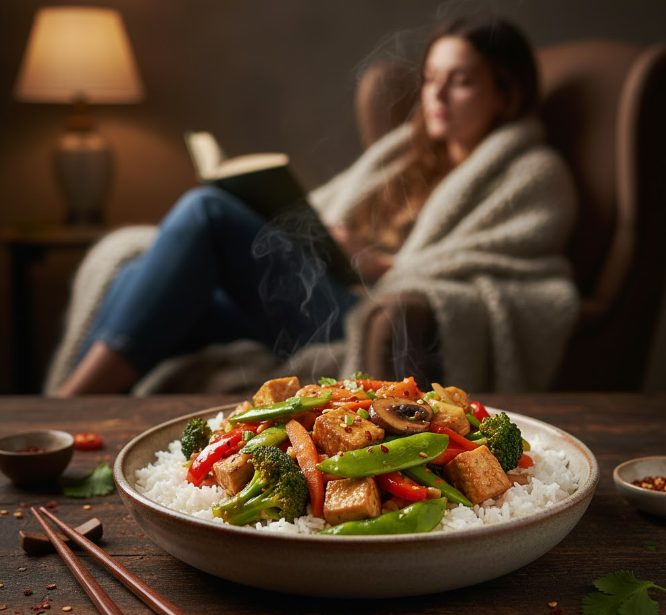
Brown rice or quinoa 🍚
Whole wheat noodles or soba
A side salad for extra freshness
Time-Saving Hacks
Buy pre-chopped vegetables if short on time.
Use frozen mixed vegetables—they cook faster and reduce prep time.
Keep sauces pre-mixed in a jar; just pour when needed.
Health Benefits of Veggie Stir-Fry
Lowers stress and fatigue by providing essential vitamins.
Helps with digestion due to high fiber content.
Supports weight management with low calories but high nutrition.
Improves mood with colorful, aromatic ingredients.

Common Mistakes to Avoid
Overcooking vegetables → lose crunch and nutrients.
Using too much oil → makes the dish heavy.
Adding sauces too early → veggies become soggy.
Not tasting while cooking → you may miss balancing flavors.
FAQs About Feel-Good Veggie Stir-Fry
Q1: Can I make stir-fry without oil?
A1: Yes! Use a non-stick pan and a splash of water or vegetable broth to stir-fry. It won’t be as rich, but it will still be tasty.
Q2: How long does it stay fresh?
A2: Best eaten immediately. Stored in the fridge, it can last up to 2 days, but veggies might become soft.
Q3: Can I freeze stir-fry?
A3: Not recommended for fresh veggies like spinach or snow peas—they get mushy. But mushrooms, carrots, and bell peppers can be frozen.
Q4: Is it suitable for kids?
A4: Absolutely! You can adjust the sauce for mild flavors and add their favorite veggies.
Q5: Can I make it spicy?
A5: Yes! Add chili flakes, fresh chilies, or hot sauce according to taste. 🌶️
Conclusion
A feel-good veggie stir-fry is more than just dinner—it’s therapy for tired evenings. It’s fast, colorful, nutritious, and can lift your mood after a long day. With simple ingredients, quick prep, and endless flavor options, it’s a dish that never gets boring. So, next time you feel drained, fire up your pan and enjoy a plate of warmth, crunch, and satisfaction. 🥦🍲✨
